
March 17, 2011


Get Ready, Get Set............
Every year King 5 chronicles things that are the "Best of the Northwest" and every year Camp Orkila ranks among the best summer camps in the area.
On March 21st, the voting will start and you can then show what you already know: That Orkila is one of the greatest Northwest summer camps around. So get ready to share your pride with your friends, family and other folks who might be interested.
In case you are having trouble finding the competition, here is a link to it.
Just for the memories, here's a picture that might take you back to the Wizard of Oz event during week 5.

March 14, 2011
WEEKLY QUOTE: A ship in...
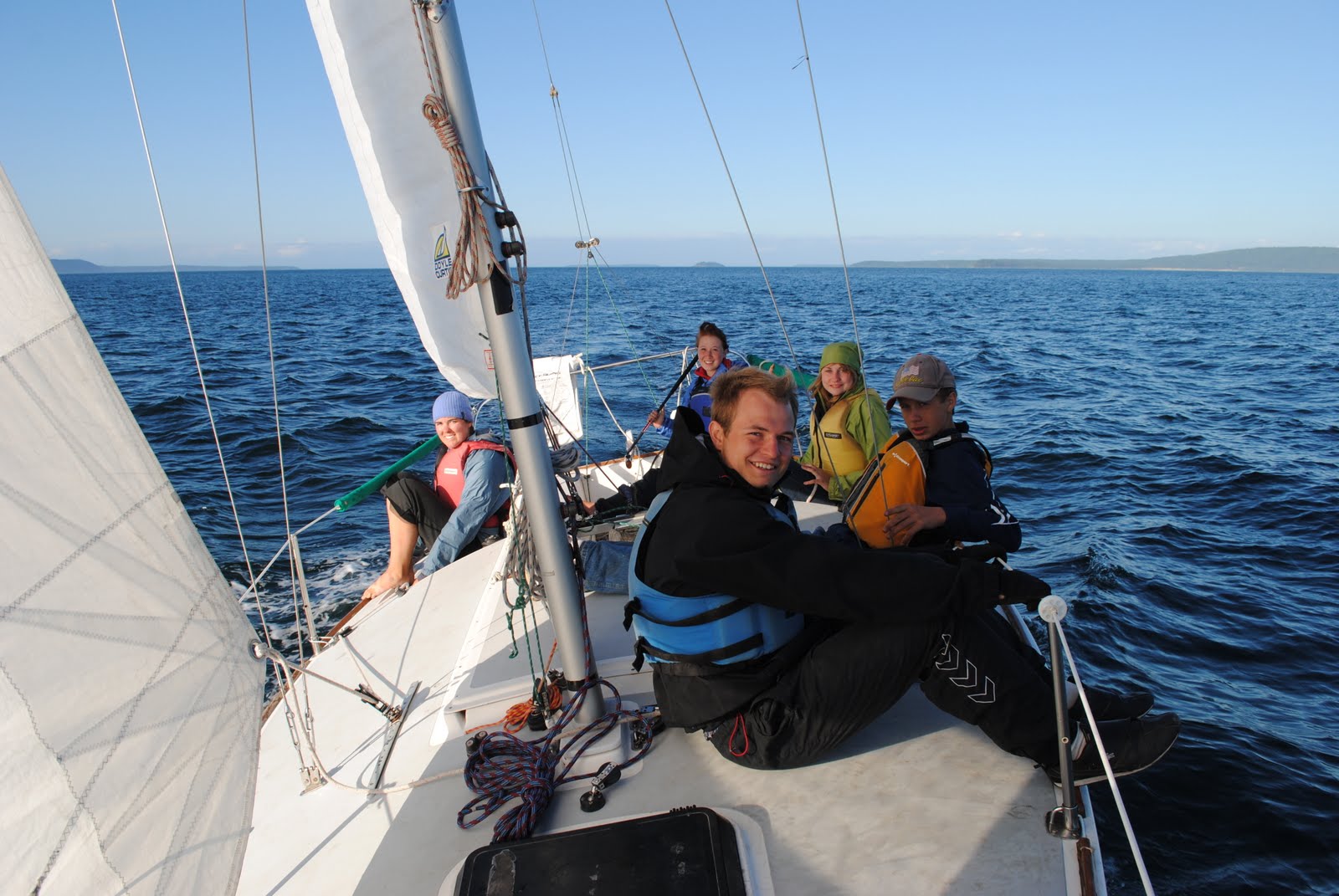
- John Shedd
March 7, 2011
WEEKLY QUOTE: When your life...

"When your life runs out of rope, tie a knot and swing!"
Every Monday (until July when summer campers begin to arrive) an image from the 2010 summer will be posted. This image will be paired with one of the many quotes read during one of the Closing Campfires last summer. Enjoy!
March 4, 2011
MARINE LECTURE SERIES: MARCH 8TH

“Missing Marine Birds: Who’s Flown the Coop? ”
The next Marine Science Lecture, with Dr. Ignacio Vilchis, Postdoctoral Fellow, SeaDoc Society will take place on Tuesday, March 8, at Camp Orkila Marine Center and will consider the quesiton, “Why study marine birds?”
In short, they tell us a lot about the health of our ocean. While the 172 bird species that use the Salish Sea are each fascinating in their own right, collectively they also tell a story. When multiple species are declining we can evaluate the reasons why and learn about problemsthat are impacting multiple parts of the system.
SeaDoc’s marine bird project, led by Postdoctoral Fellow Nacho Vilchis, is unique since it’s one of the first attempts to gauge the status and trends of marine bird populations across the entire Salish Sea ecosystem.
Both American and Canadian scientists have been looking hard at changes in marine bird abundances since the 1990s. But agencies in both countries don’t have a mandate or the resources to do a cross border investigation of the entire Salish Sea.
This is critical because population declines in one part of the ecosystem may be offset by population increases somewhere else. That is to say, the birds might have flown to a new location. By looking at the whole ecosystem we get a much clearer idea of what’s really goingon.
Marine birds have a few cool aspects that make them excellent indicators of ecosystem health.
First, they’re easy to observe. We can go out and watch (or count) marine birds. This makes them much easier to study than forage fish, salmon, seals, killer whales, or pretty much any other group of animals in the ecosystem.
Second, for the most part they’re not exploited by humans. Not only are marine birds not commercially harvested but also there’s little sport hunting. Although some sea ducks are hunted, most marine birds like oystercatchers, loons, and gulls are not harvested.
And third, most species are long-lived. For example, Black Oystercatchers can live 16 years, Common Loons can live 19 years and the Glaucous-winged Gull can live to be 24 years old. Marine bird species have evolved this adaptation in response to the highly variable marine habitat. Food supply is not constant year after year.
Because marine birds can weather a bad year and go on to reproduce, changes in population tell us more about long-term trends in the environment.
Taken together, these factors make marine birds important to track for what they might tell us about larger issues and trends throughout the marine ecosystem.
Nacho Vilchis is in the middle of a two-year investigation into marine bird populations in the Salish Sea. He’s been collecting data sets from both sides of the border, including information from suchpartners as Bird Studies Canada, Canadian Wildlife Services, Simon Fraser University, the University of British Columbia, the Audubon Annual Christmas Bird Count, the University of Washington and the Washington Department of Fish and Wildlife.
This lecture will be the first time Dr. Vilchis shares the preliminary results of this groundbreaking project. It takes place at 7pm on Tuesday, March 8 at the Camp Orkila Marine Center on Orcas Island.
The 2010/11 Marine Science Lecture Series was created to inspire the general public and to highlight the amazing fish and wildlife of our region. Lectures are free. Please park in the upper parking lot at Camp Orkila. Shuttle service from the parking lot to the talk is available before and after the lecture.
The lecture Series is presented by program partners The SeaDoc Society and YMCA Camp Orkila. It has been made possible through generous sponsorship by Tom Averna (Deer Harbor Charters), Eclipse Charters, West Sound Marina and co-sponsorship by Barbara Brown, The KingfishInn and Shearwater Kayaks.
February 14, 2011
February 10, 2011
41 PLACES TO GO IN 2011
Recently the New York Times released an article titled "41 Places to Go in 2011" - and below is an excerpt.
2. San Juan Islands, Wash.
Bold-face restaurateurs vie with unspoiled nature. Nature wins.
The big draw for the San Juan Islands this year just might be its dining scene. Blaine Wetzel, a former chef at the wildly acclaimed Copenhagen restaurant Noma, took the reins at Willows Inn on Lummi Island (due to reopen on Feb. 10), while Lisa Nakamura, who has trained with big-name chefs like Thomas Keller, opened Allium on Orcas Island.
But the eternal lure of the San Juans — what brings chefs out as well as tourists — are the landscapes. On islands from Shaw to Decatur, pastoral hills give way to broody forests and scrappy escarpments that overlook fjordlike inlets. Thanks to an active land preservation effort by organizations like the San Juan County Land Bank, each year new areas are protected from logging or unruly development, and in turn provide fresh terrain for the public to explore.
Last year, the San Juan Island National Historic Park grew by 312 acres with the purchase of densely forested Mitchell Hill. On Lopez Island, a 50-year lease signed by the state Department of Natural Resources in 2009 now protects the Lopez Hill area from logging; a web of public trails winds past mossy conifers and madrona trees with peeling cinnamon-red bark. And some smaller parcels have the air of a secret about them, like the spectacular Watmough Bay Preserve on Lopez, with a trail that leads to a strip of beach on a wooded inlet, its moody water as magically lighted as a Bierstadt painting.
— SARA DICKERMAN
February 8, 2011
CAMP MAINTENANCE NEVER STOPS
 All of Camp's fire extinguishers are being checked and serviced today.
February 3, 2011
DOE BAY CAFÉ HELPS TO SUPPORT CAMP

Thursdays only. Pizza served from 5 pm - 10 pm. Open Mic starts @ 7:30 pm.
February 2, 2011
MARINE LECTURE SERIES: FEBRUARY 8TH
“Beaver and Salmon working together? What next?”

The beaver, at work building dams that help the salmon habitat. Photo courtesy of Greg Hood
When Greg Hood went looking for sweetgale plants in the Skagit River delta, he found something interesting and unexpected.
Hood is a senior research scientist at the Skagit River System Cooperative in La Conner, working on salmon recovery issues. Sweetgale is an important plant for juvenile salmon because it overhangs the water in tidal estuaries, providing salmon shelter and food in the form of insects that fall off the plants.
Hood found sweetgale, but he also found beavers. Well, not the beavers themselves, they’re nocturnal. But he found plenty of dams, pools, and tracks, especially near the sweetgale plants.
We’re accustomed to thinking of beavers as freshwater animals that gnaw down upland forests “like furry chain-saw gangs,” in the words of Seattle Times writer Lynda Mapes. But although beavers don’t live in the ocean, they can tolerate the moderate salinity of tidal estuaries. And guess what, the actions of the beavers benefit salmon.
Come hear Greg Hood speak about the complex interactions between plants, insects, salmon & beavers on Tuesday, February 8 at 7:00 pm at YMCA Camp Orkila on Orcas Island.
The 2010/11 Marine Science Lecture Series was created to inspire the general public and to highlight the amazing fish and wildlife of our region. Lectures are free. Please park in the upper parking lot at Camp Orkila. Shuttle service from the parking lot to the talk is available before and after the lecture.
The lecture Series is presented by program partners The SeaDoc Society and YMCA Camp Orkila. It has been made possible through generous sponsorship by Tom Averna (Deer Harbor Charters), Eclipse Charters, West Sound Marina and co-sponsorship by Barbara Brown, The Kingfish Inn and Shearwater Kayaks.
Article from Bull Wings: Orcas Issues, Views, and NewsJanuary 27, 2011


January 22, 2011
DECK WORK
 The Larry Norman Lodge deck is getting worked on. Pictures updating the progress to be posted in the future!
January 20, 2011
CAMP ALUM PLANNING A NEAT EVENT
Tickets are still available!
Note: This event is for those 21 and over.
January 18, 2011
STAFF TRAINING
